
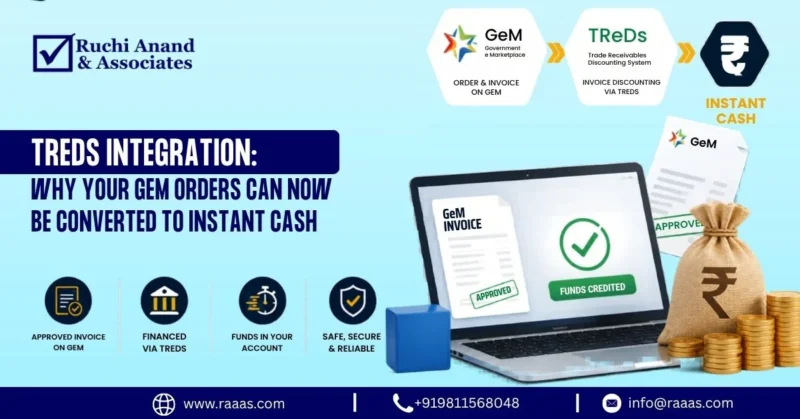
TReDS Integration: Why Your GeM Orders Can Now Be Converted to Instant Cash
Consider having secured an enormous procurement contract either by a government ministry or one of the highly esteemed Public Sector Undertakings (PSUs). The first impulse is joy; however, as the joy wanes, one finds oneself in a state of fear. This fear is called the Working Capital Crunch.
Over the years, there existed a bottleneck in the system with regards to MSMEs and vendors who have transacted through the Government e-Marketplace. Even though GeM made contracts easy and possible, the 30-day to 90-day payment cycles became bottlenecks that would lock up much-needed funds.
That particular story has come to an end. This is because with the integration of TReDS within the GeM portal, all those outstanding invoices of yours can now be easily monetized within no time at all! This is what we will look into here – what that means for you and how it will help your business.

The Core Problem: The Cash Flow Conundrum on GeM
GeM is an outstanding success story when it comes to public procurement processes in India. The system made the procurement process more democratic since it allowed small enterprises to fight for major government contracts.
Yet being awarded a contract is not everything, as there must be delivery, which implies significant expenses associated with raw materials, labor force, transportation, etc. As a result, in case the payment is delayed, a serious misbalance between income and expenditure arises.
Traditional banking financing may not be the only solution. The granting of working capital facilities involves cumbersome documentation processes, collateral requirements, and processing delays lasting many weeks. A growing company cannot afford to wait 45 days for payments because by then the new contract will already have been signed elsewhere.
Enter TReDS: What is it?
The Trade Receivables Discounting System (TReDS) is a system that was created by the RBI as an institutional arrangement for the financing of trade receivables of MSMEs by corporations and other buyers, which may include Government Departments and Public Sector Undertakings (PSUs).
TReDS is a system wherein MSMEs will put up their invoices (trade receivables) and financial institutions (banks and non-banking financial companies) will bid for financing such invoices. Such financing is entirely without recourse to the MSME since if the buyer does not pay after the period, the financier cannot go to the MSME to recover the payment.
The Masterstroke: GeM and TReDS Integration
Integration of TReDS in GeM allows for the seamless connection between the process of order execution and cash flow.
Previously, a vendor had to manually take an invoice approved on GeM and upload it to a separate TReDS platform (like RXIL, M1xchange, or Invoicemart). The integration automates this entire pipeline.
How the Integrated Flow Works:
- Order Execution: The order is fulfilled by the vendor through the GeM portal.
- Invoice Generation: An invoice is raised, and a Consignee Receipt and Acceptance Certificate (CRAC) is issued by the buyer through the GeM portal.
- Seamless Push to TReDS: Data of the approved invoice is directly pushed into the selected TReDS system by the vendor.
- Competitive Bidding: Different banks and financial institutions examine the invoice approved by the government and offer competitive bids (at varying interest rates for discounting the bill).
- Instant Cash Disbursal: The vendor selects the most favorable bid (lowest interest rate), and the money is deposited in their account within 24 to 48 hours.
- Final Settlement: Payment of money against the invoice is made directly by the government department through TReDS platform on the payment date of the invoice.
Why This Changes Everything for Vendors: The Benefits

1. No Collateral, Instant Access
As opposed to traditional corporate borrowing methods, invoice financing through the TReDS process does not demand any form of collateral like property, machinery, or fixed deposits. Here, the collateral is the verified bill presented by a government department.
2. Highly Competitive Interest Rates
On TReDS, financiers bid against each other to buy your invoice. Because the underlying buyer is a government department or PSU (which carries virtually zero credit default risk), banks offer incredibly low discounting rates—often significantly lower than standard working capital loans or cash credit facilities.
3. Non-Recourse Financing
This is perhaps the most protective feature for small vendors. The financing is non-recourse. Once the bank discounts your invoice and transfers the cash to you, your liability ends. If you delay making the payments by the stipulated time period, the bank will go to the government department, and not to you, so there will be no effect on your balance sheet.
4. Boosted Over-all Capacity
When capital cycles turn from 60 days to 2 days, your capital efficiency skyrockets. Now you can re-invest this money immediately in raw materials, make bigger orders simultaneously, and also participate in tender bidding worth millions in GeM without any financial burden.
A Comparative Overview
To understand how monumental this shift is, let’s look at a comparative breakdown of traditional payment cycles versus the new integrated TReDS model:
| Operational Metric | Traditional GeM Payment Flow | Integrated GeM-TReDS Model |
| Time to Cash Realization | 30 to 90 Days (Subject to departmental clearings) | 24 to 48 Hours (Post-CRAC generation) |
| Collateral Requirement | High (Requires property/machinery for credit lines) | None (Financing is strictly invoice-backed) |
| Impact on Credit Rating | Increases debt-to-equity ratio on balance sheet | No debt added (It is a sale of receivables) |
| Pricing Leverage | High interest rates on traditional business loans | Competitive bidding drives down discounting rates |
| Collection Responsibility | Follow-ups required by the vendor | Handled entirely by the platform/financier |
Step-by-Step Guide to Activating TReDS on GeM
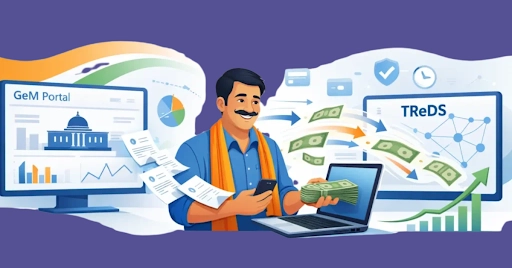
The process of using this facility is quite simple. Following is how you can benefit from this instant source of money flow:
Step 1: Registration
It is important that your firm gets itself registered as an MSME entity on the Udyam portal and also you are a live merchant in the GeM portal.
Step 2: Onboard on a TReDS Portal
You need to register your company on any one of the RBI-certified TReDS portals such as RXIL, M1xchange or Invoicemart.
Step 3: Opt-in on GeM
During the acceptance of an order or within the GeM portal dashboard, choose TReDS as the mode of payment.
Step 4: Execute & Automate
As soon as you fulfill the order placed by you and receive the digital CRAC, login to your TReDS portal dashboard to review the bids, accept the best offer and enjoy the money credited into your account.
Navigating the Indian Business Landscape
Integration of TReDs and GeM stands out to be an excellent example of how India is developing its digital infrastructure rapidly. Such projects have made India’s market extremely profitable for both local as well as foreign businesses wanting to enter into India’s market. Understanding the regulatory framework, using the online platforms, and maximizing your taxes needs expert help.
In order to grow big within this dynamic environment, the requirement for the correct partner for business structuring and back office support is essential. The process of seamless entry into the market requires complete support at each phase of its growth. From the first step of designing India Entry Strategy plans to complicated steps of Company Establishment in India and the official process of Registration of Foreign Companies in India, proper guidance helps you stay compliant right from the start. Foreign organizations looking to ride the wave of development in India need professional services related to Foreign Entity Setup in India or Foreign Company Incorporation in India, which will help them follow all Indian laws and regulations. After setting up the business, there is always a need to streamline the internal finances and accounting processes. This can be easily done with the help of accounts outsourcing solutions like Accounts Outsourcing for Startups, robust enterprise setup through SAP Outsourcing, and efficient premium tax advisory services that cater to GST and other corporate tax requirements.
To explore how your business can optimize its operational frameworks, stay compliant, and leverage Indian digital ecosystems effectively, explore our insights and advisory verticals at www.raaas.com