
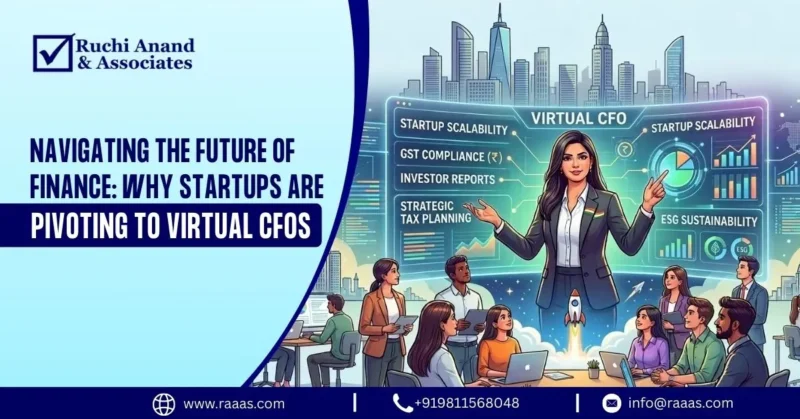
Navigating the Future of Finance: Why Startups are Pivoting to Virtual CFOs – A Comprehensive Case Study
In the modern global economy, the traditional office cubicle is rapidly giving way to agile, distributed teams. As the startup revolution sweeps across major economic hubs, a significant shift is occurring in the boardrooms of the world’s most innovative companies. Behind the glamour of multi-million dollar funding rounds and high-speed growth lies a complex, often treacherous financial landscape that requires more than just basic bookkeeping.
As startups scale from “garage operations” to Series A and beyond, they face a critical dilemma: their financial needs outgrow a basic accountant, yet they cannot justify the massive annual salary of a veteran, full-time Chief Financial Officer (CFO). This gap has led to a seismic shift in the corporate ecosystem—the rise of the Virtual CFO.
In this detailed exploration, we analyze why the “Virtual CFO” (vCFO) model is no longer a luxury but a strategic necessity for the modern startup circuit. We will delve into the operational advantages, cost-benefit analysis, and a simulated case study to understand this transition.
The Evolution of the Startup CFO
Historically, the CFO was a “scorekeeper”—someone who managed the ledgers and ensured the taxes were paid. In the modern startup world, the role has transformed into a “strategic navigator.” A startup doesn’t just need someone to record history; it needs someone to predict the future.
For any high-growth SaaS company, Fintech platform, or D2C brand, the financial challenges are multi-faceted:
- High Burn Rates: Managing the runway is a daily battle where every rupee or dollar counts.
- Complex Compliance: Navigating the labyrinth of evolving tax laws, GST filings, and international reporting standards.
- Investor Pressure: Meeting the rigorous reporting standards and transparency requirements of Venture Capitalists (VCs) and Angel Investors.
- Rapid Scalability: The need for financial systems that can handle 10x growth overnight without breaking.
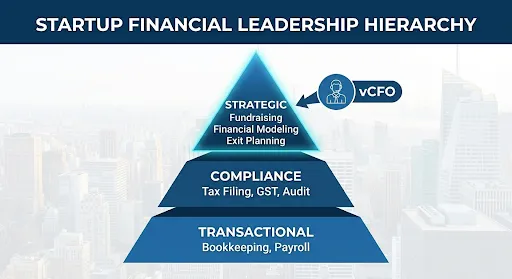
The Problem with Traditional Hiring
In today’s competitive talent market, hiring a top-tier CFO is an expensive and time-consuming affair. Startups often find themselves in a “Catch-22”:
- If they hire a junior accountant, they lack the strategic foresight needed for fundraising and global expansion.
- If they hire a heavyweight CFO, the high fixed salary “burns” through their seed capital before they can achieve true product-market fit.
Enter the Virtual CFO. By providing high-level financial expertise on a fractional, remote, or project-based model, vCFOs offer the “brainpower” of a veteran leader at a fraction of the cost.
CASE STUDY: The Pivot of “TechFlow Solutions”
The Background:
TechFlow Solutions (name changed for privacy), a tech-enabled logistics startup, was on a high-growth trajectory. Within 18 months of launch, they had secured Pre-Series A funding and grew their team from 5 to 50 members.
The Crisis:
Despite rising revenues, the founder felt a lack of control. Their monthly “burn” was inconsistent, investor reports were often delayed by weeks, and a surprise tax audit revealed several clerical errors that threatened heavy penalties. The internal team consisted of one junior accountant who was overwhelmed by the complexity of inter-state transactions, payroll compliance, and vendor management.
The Intervention: Switching to a Virtual CFO
TechFlow partnered with a specialized firm providing vCFO services. Here is how the transition transformed their business:
1. Real-Time Cash Flow Visibility
The vCFO implemented cloud-based accounting tools integrated with real-time dashboards. For the first time, the founder could see “Days Sales Outstanding” (DSO) and “Burn Rate” on a mobile device. The vCFO identified that cash was being trapped in unoptimized vendor payment cycles. By renegotiating terms, the vCFO extended the runway by three months without raising an extra penny in debt or equity.
2. Investor-Grade Reporting
Before the switch, investor updates were messy spreadsheets with inconsistent formulas. The vCFO introduced standardized MIS (Management Information System) reports. When TechFlow went for their Series A round, the due diligence process—which usually takes months—was completed in record time because the “data room” was already audit-ready.
3. Strategic Tax Planning
The vCFO didn’t just file taxes; they optimized them. By structuring “Share Based Payments in India” (ESOPs) correctly, they created a tax-efficient wealth-creation tool for employees while ensuring the startup remained compliant with the latest regulatory guidelines.
Why Modern Startups are Making the Switch
A. Proximity to Global Standards
In a digital-first world, startups are no longer local; they are global from Day 1. This means they are under the constant watch of various regulatory bodies. Missing a GST deadline or a statutory filing isn’t just a minor slip; it can lead to the freezing of bank accounts and loss of reputation. A Virtual CFO, backed by a team of experts, ensures that every GST Registration in India and subsequent filing is flawless.
B. The “On-Demand” Executive Economy
We are living in an era of “fractional” expertise. Talent is no longer bound by geography. This allows startups to tap into “on-demand” wisdom from veteran CAs and finance professionals who have seen multiple business cycles. Why pay for 100% of a CFO’s time when you only need 20% of their “best” strategic ideas?
C. Focus on Business Sustainability Reporting
With the global shift towards ESG (Environmental, Social, and Governance), even young startups are being asked about their long-term sustainability. A vCFO helps a company begin Business Sustainability Reporting in India early, making them significantly more attractive to global investors who prioritize ethical and sustainable growth over “growth at any cost.”
Key Responsibilities Managed by a Virtual CFO
- Financial Modeling & Forecasting: Building the “What-If” scenarios. What happens if we double our marketing spend? What if our customer acquisition cost (CAC) rises by 15%?
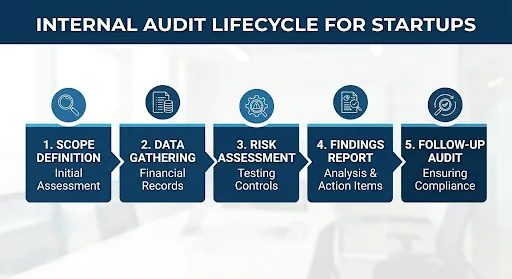
- Internal Controls & Audits: Implementing a robust Internal Audit in India framework to prevent leakages, duplication of payments, and internal fraud—common issues in fast-growing, decentralized teams.
- Data Security: In an era of cyber-threats, the vCFO coordinates the Best Data Security Audit Service to ensure that financial data and customer information are “hack-proof” and compliant with data protection laws.
- Fundraising Support: Acting as the “Pitch Partner,” the vCFO helps founders value their company accurately and negotiate term sheets that don’t compromise the founder’s long-term control.
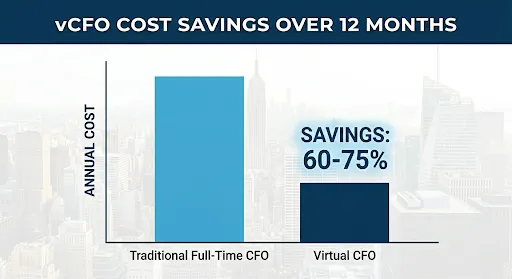
The Cost-Benefit Analysis: Virtual vs. In-House
| Feature | Full-Time CFO | Virtual CFO (vCFO) |
| Annual Cost | Very High (Fixed) | Low to Moderate (Variable) |
| Expertise | Deep but single-industry focused | Broad; cross-industry insights |
| Flexibility | Rigid; difficult to scale down | Scalable; pay only for what you use |
| Infrastructure | Office space, benefits, insurance | Remote-ready; zero overhead |
| Team Support | Usually a lone wolf | Backed by an entire firm of experts |
The Path Ahead: Technology and the vCFO
The future of the vCFO is intertwined with AI and Automation. We are moving toward “Autonomous Finance” where AI handles the repetitive bookkeeping, and the Virtual CFO provides the “Human Intelligence” to interpret those numbers into actionable business strategies.
For a startup, the choice is clear. In the high-stakes game of business, you don’t need a person to just “keep the books”; you need a strategic partner to help you navigate the storm.
Conclusion and Professional Resources
The transition from traditional accounting to a Virtual CFO model is a milestone in a startup’s maturity. It signifies a shift from “survival mode” to “strategic growth mode.” By leveraging external expertise, founders are freeing themselves from the “shackles of spreadsheets” to focus on what they do best: innovating and disrupting the market.
Whether you are looking for a Chartered Accountant in India to manage your initial setup or seeking the Top Indian Audit Firms to prepare for an IPO or international acquisition, the virtual model provides a bridge to world-class financial management. As the regulatory environment becomes stricter, having a seasoned Tax Advisor In India as your Virtual CFO ensures that your growth is not just fast, but legally sound and sustainable.
At RAAA (Ruchi Anand & Associates), we specialize in navigating these complexities for startups across all regions. From ensuring seamless GST Registration In India to conducting a comprehensive Internal Audit in India, our team provides the financial backbone for your business. We also assist in complex areas like Share Based Payments in India to help you retain your top talent and provide the Best Data Security Audit Service to protect your digital assets. As the landscape evolves, our commitment remains to help you lead with Business Sustainability Reporting in India, ensuring your startup is ready for the global stage.
For more insights on financial compliance and startup growth, visit our knowledge center at www.raaas.com.